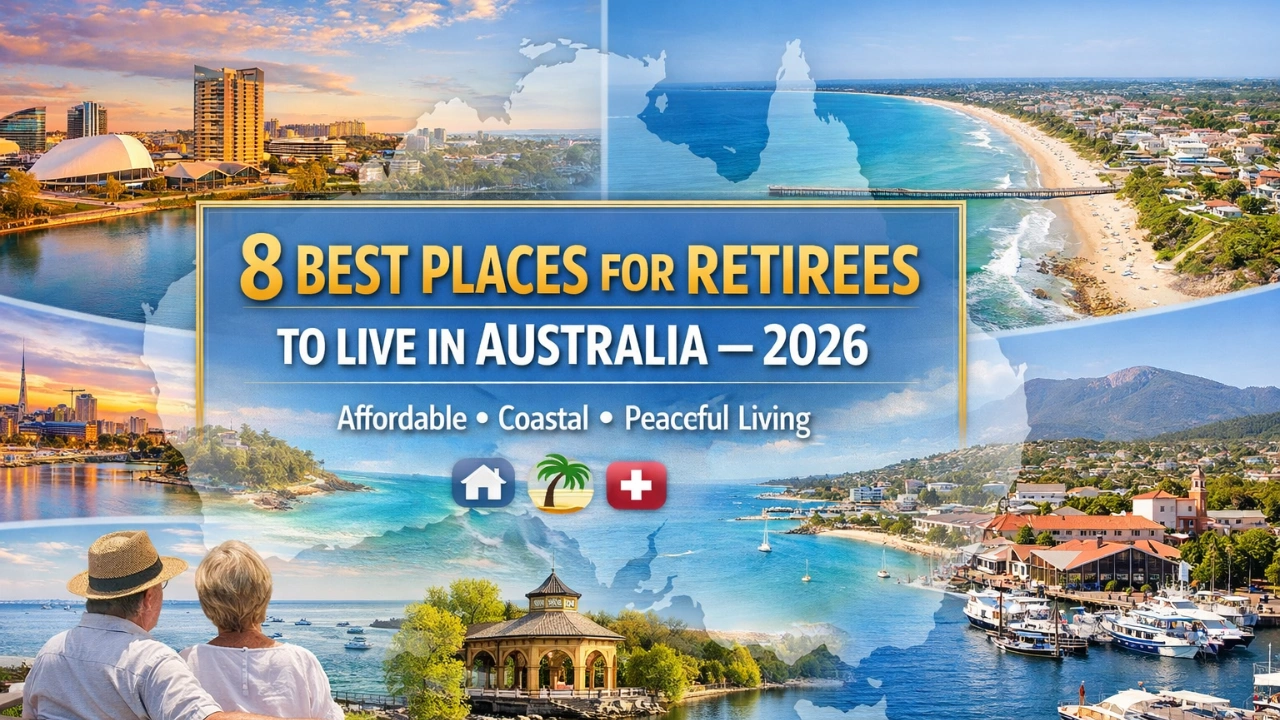
When Peter and Anne sold their family home in western Sydney last year, they weren’t just looking for a smaller house. They wanted a slower pace, lower bills, and a community where neighbours still say hello. Like many Australians entering retirement in 2026, they began searching for a place that would stretch their savings without sacrificing comfort.
With cost-of-living pressures still affecting housing, groceries, and utilities, choosing the right retirement location has become one of the most important financial decisions older Australians will make this year. According to the Australian Bureau of Statistics, nearly 17% of the population is aged 65 and over — and that share continues to grow.
Here’s what you need to know about the best places for retirees to live in Australia in 2026, based on affordability, healthcare access, safety, and overall lifestyle.

What Retirees Are Looking for in 2026
Across Australia, retirees are prioritising:
- Affordable housing or downsizing opportunities
- Access to public hospitals and specialist healthcare
- Lower council rates and living expenses
- Reliable public transport
- Safe communities with lower crime rates
- Climate suitability for health conditions
- Proximity to family
Financial planner David Hargreaves explains, “In 2026, retirees aren’t just chasing beach views. They’re looking at long-term sustainability — medical services, insurance costs, and how far their pension will go.”
1. Hobart, Tasmania
The capital of Tasmania continues to rank highly among retirees seeking natural beauty and a calmer lifestyle.

Why Hobart appeals in 2026:
- Property prices remain below mainland capital city averages
- Access to major healthcare facilities including Royal Hobart Hospital
- Strong community atmosphere
- Cooler climate for those avoiding extreme summer heat
While prices have risen in recent years, Hobart still offers better value compared to Sydney or Melbourne. Many retirees say the slower pace reduces stress and improves wellbeing.
Margaret Collins, 69, says, “We sold in Brisbane and bought outright in Hobart. That alone gave us financial peace of mind.”
2. Adelaide, South Australia
Often described as Australia’s most “livable” capital, Adelaide combines urban convenience with relative affordability.

Key advantages:
- Lower median house prices than Sydney, Melbourne, or Brisbane
- Excellent public hospitals and healthcare infrastructure
- Easy access to beaches and wine regions
- Reliable public transport
South Australia’s property market has remained more stable compared to eastern states, making Adelaide attractive for retirees who want capital-city services without extreme housing costs.
3. Sunshine Coast, Queensland
For retirees who prioritise warm weather and coastal living, the Sunshine Coast remains a top contender.
Why it stands out:
- Year-round mild to warm climate
- Expanding healthcare services including Sunshine Coast University Hospital
- Established retirement communities
- Outdoor lifestyle opportunities
While property prices have climbed, many retirees are using equity from southern states to fund a move north.

Healthcare analyst Susan Grant notes, “Queensland continues to attract interstate retirees due to its climate and growing hospital infrastructure.”
4. Geelong, Victoria
Located just over an hour from Melbourne, Geelong offers a balance between regional affordability and urban amenities.
Highlights:
- Lower housing costs compared to Melbourne
- Strong transport links to the capital
- Expanding healthcare services
- Waterfront lifestyle
Geelong has become particularly attractive for retirees who want to stay close to family in Melbourne without paying metropolitan property prices.

5. Coffs Harbour, New South Wales
Midway between Sydney and Brisbane, Coffs Harbour provides coastal living without big-city congestion.
Why retirees choose Coffs Harbour:
- More affordable housing than Sydney
- Regional hospital facilities
- Mild climate year-round
- Growing retiree-friendly infrastructure
Local councils have increased investment in community facilities aimed at supporting older residents.
6. Bendigo, Victoria
Bendigo has steadily gained popularity among retirees looking to downsize while remaining within reach of Melbourne.

Advantages include:
- Lower property prices than Melbourne
- Access to Bendigo Health services
- Strong arts and cultural scene
- Less congestion and traffic
Many retirees moving to Bendigo are unlocking significant home equity while maintaining access to essential services.
7. Mandurah, Western Australia
Located south of Perth, Mandurah offers coastal charm at a lower price point than the WA capital.
Why it appeals in 2026:
- Affordable housing compared to Perth
- Waterfront living options
- Access to Peel Health Campus
- Quiet suburban environment
Mandurah has long been a retirement hotspot, and demand remains steady.

8. Toowoomba, Queensland
Known as the Garden City, Toowoomba offers cooler temperatures than coastal Queensland.
Top benefits:
- Affordable property market
- Well-established medical facilities
- Strong sense of community
- Lower humidity
Retirees with respiratory or heat-related health concerns often prefer Toowoomba’s inland climate.
2026 Retirement Comparison Table
| Location | Housing Affordability | Healthcare Access | Climate | Lifestyle |
|---|---|---|---|---|
| Hobart | Moderate | Strong | Cool | Scenic |
| Adelaide | Affordable | Excellent | Mild | Urban + Coastal |
| Sunshine Coast | Moderate | Strong | Warm | Beach Lifestyle |
| Geelong | Affordable | Strong | Mild | Coastal + City |
| Coffs Harbour | Moderate | Good | Mild | Relaxed Coastal |
| Bendigo | Affordable | Strong | Warm Inland | Cultural |
| Mandurah | Affordable | Good | Warm | Waterfront |
| Toowoomba | Affordable | Good | Cooler | Community |
Real Stories Behind the Move
After retiring from teaching, Robert and Elaine Harris relocated from Melbourne to Bendigo in early 2026. They reduced their mortgage, cut transport costs, and now volunteer at a local arts centre.

“It wasn’t just about money,” Robert says. “We wanted connection. Bendigo gave us that.”
Similarly, Carol Nguyen moved from Sydney to the Sunshine Coast. She says the warmer weather has improved her arthritis symptoms and reduced heating costs.
Government Perspective on Retirement Living
Federal and state governments continue to invest in regional healthcare expansion and infrastructure upgrades aimed at supporting ageing populations.
A spokesperson from Services Australia says, “Retirees relocating within Australia can continue receiving Age Pension payments, but it’s important to update your address and living arrangements promptly.”
Officials also stress the importance of financial planning before relocation, particularly regarding council rates, insurance, and medical access.
Expert Insights and Data
- Nearly one in five Australians will be aged 65+ by 2030, according to demographic projections.
- Regional housing prices remain significantly lower than Sydney and Melbourne averages.
- Healthcare access has expanded in many regional centres over the past five years.
Retirement researcher Claire Thompson explains, “Regional Australia is becoming more self-sufficient in healthcare services, which reduces the historical risks of moving away from major capitals.”
What You Should Know Before Choosing Your Retirement Location
- Consider renting short-term before buying.
- Research local council rates and utility costs.
- Check proximity to GPs and specialists.
- Review transport access if you plan to reduce driving.
- Think about climate suitability for health conditions.
- Evaluate insurance premiums in coastal areas.
Planning carefully can prevent unexpected financial strain later.
Q&A: Retirement Living in Australia 2026
1. What is the cheapest place to retire in Australia in 2026?
Regional cities like Bendigo, Toowoomba, and Mandurah are among the more affordable options.
2. Is healthcare access reliable in regional areas?
Many regional centres now have upgraded hospitals, though specialist access can vary.
3. Can I keep receiving the Age Pension if I move interstate?
Yes, but you must notify Services Australia of your address change.
4. Which state offers the warmest retirement climate?
Queensland remains popular for its year-round warmth.
5. Are coastal towns more expensive than inland cities?
Often yes, especially near major capitals.
6. Is downsizing common in 2026?
Yes. Many retirees are freeing up equity to reduce financial pressure.
7. Are regional areas safer than capitals?
Many have lower crime rates, but safety varies by suburb.
8. Should I rent before buying?
Experts often recommend renting first to test the area.
9. Is Hobart affordable compared to Sydney?
Yes, significantly more affordable in housing terms.
10. Do these areas have good public transport?
Capitals like Adelaide do, while regional areas may have limited options.
11. Are there active retirement communities in these cities?
Yes, particularly in Queensland and Western Australia.
12. What about climate risks like floods or bushfires?
Retirees should assess insurance costs and local risk history.
13. Is Geelong a good alternative to Melbourne?
Yes, for those seeking lower housing costs but city access.
14. Does moving affect healthcare card eligibility?
Generally no, but always update your address with Services Australia.
15. What’s the first step in planning a move?
Speak to a financial adviser and compare long-term living expenses.










Leave a Comment