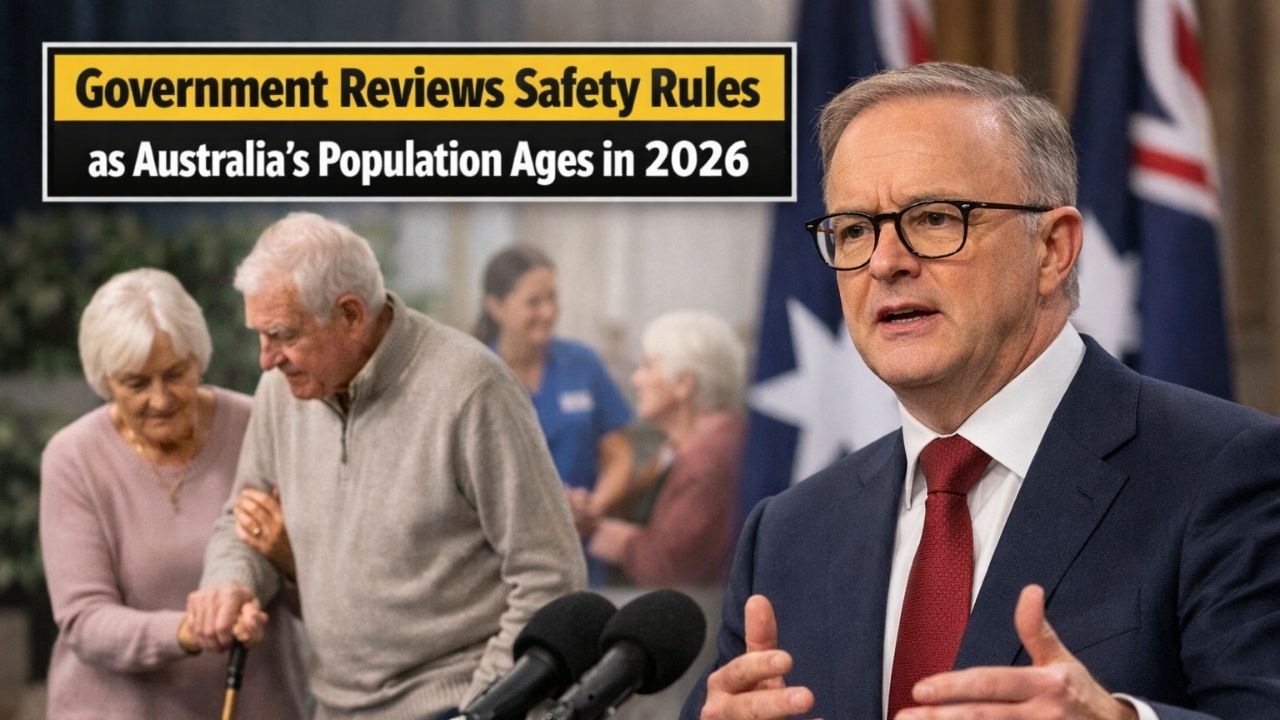
When 78-year-old Robert Jenkins renewed his driver’s licence this year, the process felt different. There were more questions, a vision check, and a discussion about medical history. “I understand why,” he said. “We’re all getting older, and the roads are busier.”
As Australia’s population ages faster than ever before, governments in 2026 are reviewing road safety rules, workplace protections, and public transport standards to reflect a shifting demographic reality. With more Australians living longer and remaining active well into their 70s and 80s, policymakers are balancing independence with safety.
Here’s what the review means — and how it could affect older Australians and the broader community.

Why the Safety Review Is Happening Now
Australia’s demographic profile is changing rapidly.
Recent government data shows:
- Australians aged 65 and over now make up a growing share of the population.
- Life expectancy continues to rise.
- More seniors are working beyond traditional retirement age.
- Licence holders over 75 are increasing each year.
Transport and health officials say existing safety frameworks were designed decades ago, when life expectancy and driving patterns were different.

A senior policy adviser stated, “We’re not trying to limit independence. We’re modernising safety systems to reflect today’s realities.”
What Areas Are Under Review
The 2026 review focuses on several key sectors where ageing intersects with safety.
1. Driver Licensing for Seniors
- Frequency of medical and vision testing.
- Conditional licences for certain health conditions.
- Reporting obligations for doctors.
- Renewal cycles shortened in some states.
While most older drivers maintain strong safety records, crash data shows increased vulnerability in serious collisions due to frailty.

2. Public Transport Accessibility
- Improved station access and lighting.
- Safer pedestrian crossings near transport hubs.
- Priority seating enforcement.
- Clearer signage for visually impaired passengers.
Officials argue that encouraging safe public transport use reduces reliance on private vehicles among seniors.
3. Workplace Safety for Older Workers
With more Australians working into their late 60s and 70s, workplace regulations are also being reassessed.
Potential measures include:

- Enhanced ergonomic requirements.
- Flexible working arrangements.
- Injury prevention programs tailored for older employees.
4. Road Infrastructure Adjustments
- Longer pedestrian crossing times at traffic lights.
- Improved road signage visibility.
- Reduced speed limits in high-risk urban areas.
Transport experts say small infrastructure changes can significantly improve outcomes for older road users.
Real Stories Behind the Policy
In Adelaide, 81-year-old Margaret Lewis voluntarily transitioned to a conditional licence that limits night driving.
“It gives me confidence,” she said. “I still have independence, but I feel safer.”

Meanwhile, 69-year-old construction supervisor Tony Harris says workplace adjustments helped him stay employed longer.
“They modified some lifting tasks and added more safety checks. It makes a difference.”
These examples reflect a broader shift: safety policies increasingly focus on adaptation rather than restriction.

Government Statements on the 2026 Review
Transport ministers have emphasised that the review is preventative, not punitive.
One state official said, “The vast majority of older Australians are safe drivers. The review ensures systems support them while protecting all road users.”
Health departments are also working with licensing authorities to clarify medical reporting rules. Doctors have called for clearer guidance to avoid uncertainty about when to notify authorities.
Critics warn against age-based assumptions.
Advocacy groups argue that safety assessments should focus on ability, not age alone.
The Data Behind the Debate
Statistics show:
- Older drivers are less likely to engage in risky behaviour such as speeding.
- However, crash severity increases due to physical vulnerability.
- Pedestrians over 70 face higher injury risk in urban traffic environments.
- Falls and mobility-related injuries remain a major concern in public spaces.
Road safety researcher Dr. Amelia Grant explains, “It’s not about blaming older drivers. It’s about recognising physiological changes and designing systems accordingly.”
Comparison Table: Current vs Proposed Adjustments
| Area | Current Practice | Potential 2026 Adjustments |
|---|---|---|
| Licence Renewal Age | Varies by state | More consistent medical review triggers |
| Vision Testing | Age-based in some regions | Standardised testing frequency |
| Pedestrian Crossing Times | Standard timing | Extended timing in senior-dense areas |
| Workplace Rules | General WHS guidelines | Age-responsive ergonomic measures |
| Public Transport | Compliance-based accessibility | Enhanced safety retrofits |
Final decisions will depend on state-by-state consultations throughout 2026.
Balancing Independence and Safety
For many seniors, driving represents freedom. Policymakers recognise that overly strict rules could isolate older Australians, particularly in regional areas.
At the same time, families often express concern about declining reaction times or medical conditions affecting driving.
Psychologist Dr. Nathan Cole notes, “The conversation is emotional. Taking away a licence can feel like losing independence. That’s why gradual, supportive systems matter.”
Conditional licences — such as restrictions on night driving or highway use — are increasingly seen as a middle-ground solution.
What Older Australians Should Do Now
- Schedule regular vision and health checks.
- Stay informed about state-specific renewal rules.
- Discuss driving ability openly with family members.
- Explore alternative transport options early.
- Consider defensive driving refresher courses.
- Monitor medication side effects that may affect reaction time.
Planning ahead reduces stress if rules tighten further.
Frequently Asked Questions
1. Are senior drivers automatically losing licences in 2026?
No. Reviews focus on safety assessments, not blanket bans.
2. Will medical checks become mandatory nationwide?
Some states may increase frequency, but policies vary.
3. Do older drivers cause more accidents?
They are generally cautious but more vulnerable in severe crashes.
4. What is a conditional licence?
A licence with specific restrictions, such as daylight-only driving.
5. Are doctors required to report unsafe drivers?
In certain states, yes — depending on medical conditions.
6. Will pedestrian crossings change timing?
Some councils are considering longer crossing times.
7. Does age alone determine licence renewal rules?
Typically age triggers review, but fitness determines outcome.
8. Are workplace rules changing?
Reviews aim to improve safety for older workers.
9. Can seniors appeal licence decisions?
Yes, most states provide review processes.
10. Are rural drivers affected differently?
Rural communities may see flexible approaches due to limited transport options.
11. Will insurance premiums rise for older drivers?
Insurance pricing varies by risk profile and claims history.
12. Is public transport being upgraded?
Accessibility and safety improvements are under discussion.
13. How often will reviews occur?
Likely periodically, based on demographic trends.
14. What if I disagree with a medical assessment?
You can seek a second opinion or formal review.
15. Where can I check official updates?
Through your state or territory transport department.
Australia’s ageing population is reshaping policy discussions across transport, workplace safety, and infrastructure planning. The 2026 safety review signals a broader shift: adapting systems to support longer, healthier lives while protecting all road users.
For older Australians, the key message is not restriction — but preparation, awareness, and proactive engagement with evolving safety standards.










Leave a Comment